 |
||||||||
| Information also in  German
and German
and English where English whereavailable |
||||||||
|
||||||||
 |
||||||||


 |
||||||
|


|
| Programa general | Música en iglesias históricas| Monday 26 “De Profundis Clamavi” Peter Kooij, bassSantiago Cumplido, countertenor or altoEnsamble “L’armonia sonora”Meineke Van del Velden, ConductorSelected arias and cantata duets for alto and bass soloists and string ensemble, Templo del Expiatorio  Selección de arias y dúos de cantatas para Alto solista, Bajo solista y ensamble Programa: Intermedio
“Klag-Lied”, Christian Geist PROGRAM NOTES In the midst of the XVII century, once the Thirty Year War finished, the transalpine influence on German religious music, more or less timidly started years before, was made more and more evident. The voices that cried out against temples being permeated by supposedly theatrical and profane melodies - or what it is the same, sinful - were silenced little by little. And from the fecund marriage between the nuovo stilo italiano and the austere national tradition - through whose veins, curiously, Italian blood also ran - a new music arose from a deep honest feeling with a depth and a vehemence in the expression of religious beliefs that nobody today would be able to find a distant profane echo in its truly overpowering notes. It is something that shows the marvelous anthology of the late German XVI Century penitential music – both Lutheran and Catholic - proposed by the young seal RAMÉE. Next to composers familiar with the baroque style, like Matthias Weckmann, Johann Christoph Bach with his Lamentation Wie bist du denn, o Gott, or Nicolaus Bruhns - of whom its impressive De Profundis is offered -, we found others hardly known like the Dutch Carmelite Benedictus Buns (c.1642-1716), with a Latin version of the same psalm on which J. C. Bach Lamentation is based, or Christian Geist (c.1650-1711), who worked in Denmark and whose Aria on evangelical versicles was also recorded here. The programme is completed by two instrumental pieces of comparable character to the previous ones: the first sonata by Biber, Fidicinium sacro-profanum, and the moving Lamento sopra la morte di Ferdinandi III, written by Schmelzer. The severe deeply moved voice of Peter Kooij really sculpts the text by communicating sincere religiosity, finding its perfect counterpoint in the instrumental group L’Armonia Sonora that, on its own, tinted with deep sorrow the lamentation for the deceased musician Emperor. This is a recording to be heard in peace, reflectively, maybe under a dim light, to reach the innermost hidden feelings and thus lift our spirits to the highest. PETER KOOIJ, bass
Peter Kooij’s ample repertoire includes all types of music from Schütz to Weill, and has recorded for Philips, Sony, Virgin Classics, Harmonia Mundi, Erato, EMI and BIS. His recordings of the complete series of Bach’s Cantatas with Masaaki Suzuki and the Japan Bach School have been warmly acclaimed. He is the Artistic Director of the "Ensemble European", a vocal group and of the "De Profundis" orchestra. He had the position of Singing professor from 1985 to 1989 in Lehrauftrag at the Musikhochschule in Hannover; from 1991 to 2000 in the Sweelinck Concervatorium, Ámsterdam. Since the year 2000, he has been a Professor in the Tokyo University of Fine Arts and Music. In 2005 he was invited to become an Honorary Professor to the Real Conservatory of The Haghe, Holland SANTIAGO CUMPLIDO, countertenor
Santiago has performed in England, Holland, Spain, France, Morocco, Egypt, Cuba, Korea and the United States. He has appeared as a soloist with the Orchestra of the English National Opera, the Baroque Orchestra of London, The Nederlands Kantorij Opera Concertante (Holland), National Orchestra of Cuba, Filarmónica de Jalisco, OFUNAM, among many others. Highly outstanding among his operatic roles, we have: "The Devil", in Saint Anthony’s Temptation by Luis Jaime Cortes; "Amore", in L'incoronazione di Poppea, written by Monteverdi; in Saint Bartholomy the Great in London; "Rinaldo", in Handel’s Rinaldo presented at the Saville Club in London. His "Orfeo" in Orfeo and Eurídice by Gluck, in Morelia is memorable; "Medarse" from Handel’s opera Lotario, in Delft, Holland. He also sang "Idelberto" in the Opera Siroe Re di Persia, also written by Handel in The Hague, Holland, among others. He has been a distinguished guest to festivals like The Old Music Festival of Seoul, Korea; the Oktober Fests, The International May Festival, The Book Fair, Historical Center Festival, The Cervantino, the Esteban Salas Festival, among many others. He has collaborated in theater and recording productions, radio and television programs, jazz and world music groups, both as a singer and percussionist, and has taken part in musical comedies, rock opera, theater and dance. As a composer, he works actively in creating music for both cinema and dance. He wrote the music for the theatre play Justificación a mi suicidio, and this work obtained him an award in 1997. In 2002 he musicalized a catwalk season for renowned clothes designer Donna Karam. In 2003 he had a CONACULTA scholarship to promote he countertenor pitch in Jalisco. Some of his next concerts include a tour in Mexico with the De Profundis orchestra and the L'Armonia Sonora, ensemble, both with bass Peter Kooij.
|
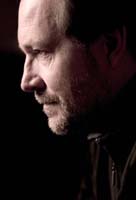 The famous Dutch bass Peter Kooij began his musical career at the age of six as a choir boy, where he sang many pieces as a soloist soprano in concerts and recordings. He later started his formal musical preparation by studying the violin. Later he began to sing under Max van Egmond tutoring, in the Sweelinck Conservatory in Ámsterdam, where he obtained his Vocal Soloist Diploma in 1980. Peter Kooij has been an active soloist throughout the world, offering many concerts in the most important theaters and concert halls, like the Concertgebouw in Ámsterdam, the Musikverein Wien, Carnegie Hall at New York, the Royal Albert London Hall; the Columbus Theater in Buenos Aires, the Berliner and Kölner Philharmonie, Palais Garnier in Paris; the Suntory and Casals Hall inTokyo, in all those places he has sung under famous conductors like Philippe Herreweghe, Ton Koopman, Gustav Leonhardt, Roger Norrington, Michel Corboz, Frans Brüggen, René Jacobs, Sigiswald Kuijken and Iwan Fisher among many others.
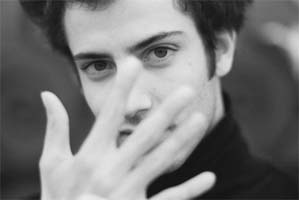 Born in Guadalajara, Mexico, he began his music studies at an early age. When he was 16, he enrolled at the Conservatorio de las Rosas in Morelia, Michoacán, to study composition and singing. He moved later to London, England, where he registered in the Trinity School of Music with Michael Chance, Nicolas Clapton, Hazel Wood and Martin Hill. In 2004 he studied at the Conservatorio de Liceu in Barcelona, Spain, with Raquel Pierotti. At the moment he is finishing his specialization on singing antique music with Peter Kooij and Rita Dams at the Royal Conservatory of the Hague, Holland.