
 |
||||
  |
||||
 |
||||
 |
||||
 |
||||
 |
||||
 |
||||
 |
||||
 |
||||

|
||||
Síguenos en
|
||||


 |
 |
 |
 |
 |
 |
|
| Programa general | Teatro Degollado | Friday 21 Orquesta Filarmónica de Jalisco In 1915, under the initiative of Maestro José Rolón, a group of musicians from Jalisco started offering symphonic and camera concert music to Guadalajara audiences, thus establishing the starting point for what in the future would be the Guadalajara Symphonic Orchestra (Orquesta Sinfónica de Guadalajara). The orchestra was managed by the Concert Society (Sociedad de Conciertos) between 1915-1924, which had a director’s board, was sponsored by private institutions and received the State Government subsidy, interrupted in 1923 and this caused the disappearance of the organisation. Nevertheless, the musicians continued working to prevent the Orchestra from being completely obliterated, and obtained economical support from Governor José Guadalupe Zuno. It must be mentioned that Don Pedro González Peña was completely devoted to the Orchestra up to 1939.
In February 1942, while Guadalajara was celebrating its 4th Centennial, Maestro Leslie Hodge was on holiday there, and when he heard classical music played by some musicians, he approached them, willing to get acquainted encouraging them to constitute a formal orchestra. He was invited to organize it and conduct it, but at that moment he already had other commitments, promising to return after the end of World War II, and in view of this offering, the Friends of Music Association (Asociación de Amigos de la Música) requested from the Governor, Marcelino García Barragán to guarantee the survival of the orchestra until Mr. Hodge returned, and thus he became the first conductor of the Guadalajara Symphonic Orchestra. This sponsorship was sustained until 1950, year on which an association was constituted, Conciertos Guadalajara, A.C. (Guadalajara Concerts, A.C.), which sponsored the Guadalajara Symphonic Orchestra with state, municipal and private institutions funding. The Guadalajara Symphonic Orchestra became part of the Arts Department in the State of Jalisco in 19971, which since then, has taken care of its artistic level and economic concerns. Directors working with the orchestra have recognized it as adaptable and versatile, averaging 60 yearly appearances among concerts, opera and ballet. It has been conducted by famous musicians, such as Leslie Hodge, Abel Eisenberg, Helmut Goldman, Eduardo Mata, Kenneth Klein, Hugo Jan Huss, Francisco Orozco, Manuel de Elías, José Guadalupe Flores, Guillermo Salvador and Luis Herrera de la Fuente. Some of the soloists have been Paul Badura-Skoda, Claudio Arrau, Jörg Demus, Henryk Szering, Plácido Domingo; Alfred Brendel, Bernard Flavigny, Jean Pierre Rampal, and Narciso Yepez, among others.
The Guadalajara Symphonic Orchestra changed its name in 1988, giving birth to the Jalisco Philharmonic (Filarmónica de Jalisco). It was intended that the whole State of Jalisco would receive its benefits. Every member of the orchestra has been selected for the quality of auditions given by aspiring interpreters, selecting its members among the very best to guarantee uniformity in sound and technical perfection of performance each of them should have. This allows us to consider that the Jalisco Philharmonic can gallantly measure up to all kinds of repertoire, including the most ambitious modern compositions. Héctor Guzmán has been the new conductor in charge of the Jalisco Philharmonic since May 2004. Héctor Guzmán, conductor
He has been Guest Conductor of the important Symphonic orchestras in Mexico: OFUNAM, Xalapa, State of Mexico, Bellas Artes Chamber Orchestra, Monterrey, the Mexico City Philharmonic, and the National Symphonic Orchestra. He has also conducted orchestras in Dallas, San Antonio, Wheeling; the Dominican Republic National Symphony Orchestra, the Collegium Orchestra at Lichtenstein Palace in the Prague Music Academy at the Check Republic, the Japan Philharmonic, the Amadeus Orchestra, the Milan Classical Orchestra in Italy and the Murcia Symphonic in Spain among others. In 2005 he made his operatic debut with the opera The Barber of Seville, and in 2007 conducted the premiere in Mexico of the Spanish version of ‘Frida’, a very successful opera. Recognized for his international work, he has received prizes such as the Lira de Oro in Mexico, the Meadows Award, the ‘Director par Excellence’ granted by the Technological De Vry Institute in the United States and the 2005 Medal to Artistic Merit, the highest decoration granted by the Government of the State of Mexico through the Music Conservatory at the State of Mexico. He was awarded the Candelario Huizar Artistic Merit Medal 2006, granted by his birth state, Zacatecas. In 2004, Héctor Guzmán was named Distinguished Citizen by the North American Association ‘Sons of the American Revolution’ for his artistic world wide level contribution. In 2000 he was included in the book ‘Great Musicians of the XX Century’, edited by the Biographical Cambridge Institute. In April 2007, Irving City and the Deputies Chamber for the State of Texas granted Maestro Guzmán a special recognition for the international level of his Artistic Career, and in 2008 he received the Mozart Medal from the Austrian Embassy, top recognition in Mexico for academic music excellence. Roberto Díaz, viola
Recent performances include the Kansas City Symphony with Michael Stern, New World Symphony with Michael Tilson Thomas, Netherlands Philharmonic with Yakov Kreizberg, Philadelphia Orchestra with Gilbert Varga and the Bilbao Symphony with Juanjo Mena. In 2007, Roberto Díaz performed the Penderecki concerto at Carnegie Hall with Christoph Eschenbach and the Curtis Symphony Orchestra. Other orchestral engagements include the National Symphony, Philadelphia Orchestra, Boston Pops, Bavarian Radio Orchestra, Gulbenkian Orchestra, Orquesta Nacional de España, Russian State Symphony, Saarbrücken Radio Orchestra, and the Orquesta Simón Bolivar. He has collaborated with conductors such as Roberto Abbado, Rafael Frühbeck de Burgos, Riccardo Chailly, Charles Dutoit, Richard Hickox, Christopher Hogwood, Peter Oundjian, Wolfgang Sawallisch, Gilbert Varga, Hugh Wolff and David Zinman. Mr. Díaz has also worked with important 20th and 21st Century composers including Edison Denisov, Krzysztof Penderecki, and Roberto Sierra. His recording of transcriptions by William Primrose with pianist Robert Koenig (Naxos, 2006) received a Grammy nomination for Best Instrumental Soloist Performance without Orchestra. Other critically acclaimed releases include a live recording of Jacob Druckman’s Viola Concerto with the Philadelphia Orchestra conducted by Mr. Sawallisch (New World Records, 2001) and works by Henri Vieuxtemps for viola and piano (Naxos, 2004).An active chamber musician, Roberto Díaz has performed with artists such as the Emerson String Quartet, Emanuel Ax, Yefim Bronfman, Christoph Eschenbach, Yo-Yo Ma, Wolfgang Sawallisch, and Isaac Stern. His festival appearances include Kuhmo, Marlboro, Mostly Mozart at Lincoln Center, Spoleto, and Verbier, among many others. As a member of the Díaz Trio, with violinist Andrés Cárdenes and cellist Andrés Díaz, he has performed throughout the United States, Canada, Europe, Mexico, and Chile. The trio was one of two ensembles invited by Isaac Stern to participate in a special concert celebrating the next one hundred years of music-making at Carnegie Hall. The Díaz Trio is currently an ensemble in-residence at the Brevard Music Festival.Roberto Díaz was principal violist of the National Symphony under Mstislav Rostropovich, a member of the Boston Symphony under Seiji Ozawa, and a member of the Minnesota Orchestra under Sir Neville Marriner. He has received numerous awards, including prizes at the Naumburg and Munich international viola competitions, and was featured on the cover of the January 2003 issue of The Strad. Program notes Oscar Lorenzo Fernández, composer
Hector Berlioz, composer
Son of a famous Grenoble doctor, his father transmitted to him his love for music and, under his guidance, learned to play the guitar, the flute and composed small pieces for different ensembles. But the doctor did not want him to devote his life to music and, in 1821, Berlioz traveled to Paris to study medicine. He did not finish his career: fascinated by operas and concerts to be heard at the French capital, he soon abandoned his studies to devote himself to music, against his family’s will. Gluck, Weber and Beethoven became his most admired music models, while Shakespeare and Goethe inspired in the literary field.He was admitted to the Conservatory in 1825, studying under JeanFrançois Le Sueur and Anton Reicha. After several failed attempts, he finally obtained in 1830 the prestigious Prix de Rome yearly granted by that Institution and in that year he produced the piece that consecrated him as one of the most original composers of his time, the Symphonie Fantastique subtitled Episodes dans la vie d’un Artiste. This autobiographical work came as a result of his non-requited passion for the British actress Harriet Smithson; all the characteristic traits of the Berlioz style can be found here: from his absolute dominion of the orchestra and his penchant for extremes –which occasionally derives in specific effectism- to the overcoming of the traditional symphony structure and the subordination to an extra-musical idea. Alberto Ginastera, composer
His musical style expands beyond nationality limitations around 1956 during his period of great works. Leaving Argentina again in 1969, he settles in Geneva, Switzerland. His music is essentially traditional, and an eclectic synthesis of several techniques from several music schools is evident in his most famous composition, Bomarzo. His fame is mostly as a composer with a strong national feeling, though highly influenced by the international music produced in Europe after the Second World War. His work can be divided in three periods: objective nationalism, subjective nationalism and neo-expressionism. The characteristics of his first composition are openly folkloric in this first period known as the “objective nationalism” inspired by the national Argentinian music, though influenced by Stravinsky, Bartok and de Falla. During this period he wrote Danzas Argentinas op. 2 for piano, Estancia (ballet),Cinco Canciones Populares Argentinas, Las horas de una estancia y Pampeana nº 1. The premiere of the orchestral suite for his ballet Estancia, consolidated his prestige in Argentina. He starts employing more complex composition techniques in 1948, corresponding to the period of subjective nationalism, without taking revolutionary positions. He abandons the traditional popular elements, though he continues taking them in as symbols. He never abandons the Argentinian traditions. From this phase he left us Pampeana n. 3 for orchestra and Piano Sonata No. 1. During this second period, initiated with this last work, Ginastera adopted the dodecaphonic technique. He always had a new free approach and conception, highly personal, on the structure he was going to use in his music, but it always had an unmistakably nationalist characteristic. His String Quartet No. 2 has the same rhythmic quality already present in his first compositions, and, in spite of the dodecaphonic techniques, this quartet is essentially tonal. Ethnic characteristics are sublimated and present in a less conscious manner. His neo-expressionist period starts approximately in 1958. It is marked by a continuous search for the most advanced technological procedures, as well as by a diminishing importance that, until a short time before, he had granted to explicit national characteristics. There is no more folklore, but he still includes Argentinian elements, as he himself said. Besides his ever increasing approach to dodecaphonic structures, he also responded to some new currents appearing after the Second World War by integrating certain traits of alleatory and microtonal composition, all within his very own general stylistic focus. The most important music composed during this period were the operas Don Rodrigo, Bomarzo and Beatriz Cenci, which had a great success and placed him as the most important Latin American composer of his time. From this last period we have two Piano concerti,, one Violin Concerto, the Popol Vuh for orchestra, the Concerto n. 2 for cello and orchestra, and the Cantata for Magical
|


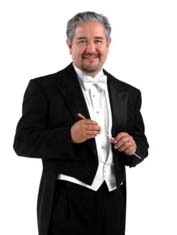 Maestro Héctor Guzmán is nowadays respected internationally as one of the most outstanding Mexican musicians and is now Conductor of the Symphonic orchestras at Plano, Irving and San Angelo in the United States. In 2004, he won the International Contest ‘Seven Conductors for a Baton’, and was officially named Conductor of the Jalisco Philharmonic Orchestra, confirming his place as one of the most important and outstanding podium figures for Mexico and the world.
  A violist of international reputation and President of the Curtis Institute of Music, Roberto Díaz follows in the footsteps of previous soloists/directors such as Rudolf Serkin, Gary Graffman, Efrem Zimbalist and Josef Hofmann. As a professor of viola at Curtis and former principal violist of the Philadelphia Orchestra, Mr. Díaz has already had a significant impact on American musical life and will continue to do so in his dual roles as performer and educator.
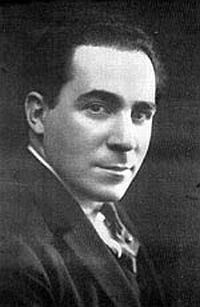 Oscar Lorenzo Fernandez was born on November 4th, 1897 in Rio de Janeiro, Brazil. As a child he received music lessons from his sister. In 1917 he got into the National Institute of Music where he took harmony, counterpoint, and fugue lessons from Francisco Braga, Henrique Oswald, and Frederico Nascimento, among others. He was one of the founders of both Rio de Janeiro's Brazilian Conservatory and Brazilian Academy of Music.
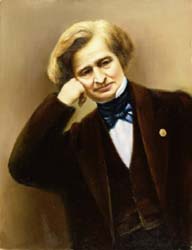 This French Composer was born in 1803 atLa Côte-Saint-André, and died in Paris, in 1869). Hector Berlioz is one of the paradigmatic figures of Romanticism: his novelesque and passionate life, as well as his anxiousness for independence are reflected in an unconventional, daring music that does not admit rules and which highlights, above all, the importance granted to the orchestral timbre, inspired by literature and not by music. Together with Franz Liszt, Berlioz is considered as one of the most important driving forces of the so called programmatic music.
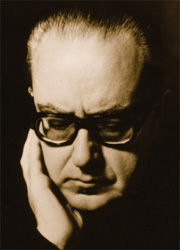 Born in Buenos Aires, Argentina, on April 11, 1916, he died in Genève, Switzerland on June 25, 1983. By 1941 he was already a Composition Teacher at the National Conservatory, and soon after married to Mercedes del Toro. His first important work was a ballet, Penambí, which made him known in all Argentina. He left his country between 1945 and 1948 because of his differences with Perón. He travelled to the United States, where he studies with Copland at Tanglewood.