
 |
||||
  |
||||
 |
||||
 |
||||
 |
||||
 |
||||
 |
||||
 |
||||
 |
||||

|
||||
Síguenos en
|
||||


 |
 |
 |
 |
 |
 |
|
| General program | Musica en iglesias históricas | Thursday 27th Time: 20:45 hrs. Program: DANZAS IBEROAMERICANAS Joaquín Turina (1882-1949) SONATA Op.61 Isaac Albéniz (1860-1909) CANTOS DE ESPAÑA Op.232 Alberto Ginastera (1916-1983) Astor Piazzolla (1921-1992) SUITE TROILEANA
Israel Vásquez, guitar "Brilliant technique, his interpretations are inspiring". Leonberger Kreis Zeitung (Newspaper from the Leonberg Region.)
In 2004 he was admitted to several European universities and conservatories, among them the Royal College of Music, the Guildhall School of Music and Drama, both in England; the Royal Conservatory at The Hague, Holland; the Superior School of Music at Münster and the Superior School of Music and Scenic Arts at Sttutgart (Staatliche Hochschule für Musik und Darstellende Kunst Stuttgart), Germany, with Professor Johannes Monno, finishing there his licentiate with academic excellence and honors; superb work in his Master, (ausgezeichnet). From December 2005 to May 2009 he took a post grade specializing in Classic Guitar Soloist Concertist with the recognized Master Aniello Desiderio, with whom he is presently working in chamber music and repertoire for a single guitar. In 2006 he merited support from the Government of the State of Jalisco and CONACULTA, within the Program for Stimulating Creation and Artistic Development with a project entitled “Mexican Guitar Music from the XX Century”, which reached its climax with four concerts in the State of Jalisco and a CD recording with the same title, where Israel recorded as soloist the Four Bagatelles by Guillermo Flores Méndez, Suite in A Minor by Manuel M. Ponce; the Montebello Suite for Two Guitars by Julio César Oliva, and the Huapango by José Pablo Moncayo for Three Guitars, arranged by Gerardo Tamez. On finishing his licentiate he received a single grant from the Association of Friends of the Superior School for Music and Scenic Arts in Stuttgart (Gesellschaft der Freunde der Staatlichen Hochschule für Musik und Darstellende Kunst Stuttgart), for his academic excellence.
As a soloist he has given concerts in different cities in Europe and Mexico: London, Manchester, Cologne, Münster, Koblenz, Vaihingen, Weil der Stadt, Bremen, Frankfurt, Stuttgart, Guadalajara and Ciudad Guzmán, with a repertoire covering from the Renaissance to Contemporary music. He has taken Magister classes with Pavel Steidl, Carlos Bonell, Charles Ramírez, Thomas Müller-Pering, Vladislav Blahá, Gary Ryan, Lily Afshar, Ricardo Cobo, Eduardo Fernández and Thomas Müeller Pering. In May 2008, he took part in one of the most important Cultural Festivals in Mexico; he invited country on that occasion was Germany. Israel Vázquez performed at the Teatro Degollado Camera Hall with a repertoire of German music for a single guitar. "From Mexico to Andalusia" is the current program Israel presents in the first part of Mexican composers music, as Manuel M. Ponce and Guillermo Flores Méndez, and in the second part, The Aranjuez Concert. Israel successfully presented this program at Weil der Stadt on March 1st, 2009. Besides being a professional musician, he is a Bachelor with Academic Excellence in English Teaching as a Foreign Language by the University of Guadalajara. He is now living in Stuttgart, Germany and is a Guitar Professor at the Weil der Stadt School of Music. Jorge Castañeda, guitar In 1997 he receives a studying scholarship from the Polish government and studies classic guitar at the music universities: “Akademia Muzyczna im, Kiejstuta i Grażyny Bacewiczów”, in Łódź (Poland), with Professor Jacek Dulikowski, and also at the “Akademia Muzyczna im, Fryderyka Chopina” in Warsaw, with Professor Marcin Zalewski. In 2003 he finishes with a Master in Arts. In 2000 he receives a scholarship from DAAD (Deutscher Akadmischer Austausch Dienst) in Germany, and studies at the “Staatlische Musik Hochschule für Musik und Darstellende Kunst” in Stuttgart, under Professor Johannes Monno. He finishes in 2008 with superb marks. He has taken Master Courses from guitar teachers such as: Sergio Assad, Odair Assad, Michael Tröster, Mats Bergstrom, Anatolij Shpakov, Abel Carlevaro, Giampaolo Bandini, Ryszard Bałauszko, Blas Sánchez, Filip Villa, Piotr Zaleski, Jakub Niedoborek, Dietmar Kres, Leszek Potasiński, Thomas Müller-Pering, Alan Neave, Thomas Kirchhof, David Tannembaum, David Russell, Olaf van Gonnisen, Graham Devine and Pavel Steidl.
Experience as Concertist: He has been guest artist for the following guitar festivals: “Wrocławskie Towarzystwo Gitarowe” (Poland, 2002); “Guitar Encounters at Mazowsze in Twierdza Modlin, Nowy Dwór Mazowiecki” (Poland, 2002 and 2003), “Guitar Festival at Międzyrzecze-Poland” (2003); International Guitar Festival “The Renaissance of the Guitar”, at Minsk and in Bomel (Belorus, 2003 and 2004), “The Guitar and its Friends”, at Warsaw (Poland, 2004), “International Guitar Festival at Trzesącz-Rewal”, (Poland 2004), “Guitar Summer Festival” at Wrocław (Poland, 2004).”; XII Nieustający Festiwal Gitarowy w Lublinie” at Lublin (Poland, 2004), “Mistrzowskie Koncerty Gitarowe” at Trzebiatów (Poland, 2005), “I International Guitar Competitio Festival, GITAS” at Kijev (Ucrania, 2005). Then, at this Festival “I Warsaw Guitar Festival” (Poland, 2005), the work of the Peruvian composer Celso Garrido Lecca was premiered, Concert for Guitar and Four Instrumental Groups,. After that came the “XII Kulturfestival” in Beirut and Biblos(Lebanon, 2006);“ Rotenburger Gitarrenwoche” at Rotenburg (Germany, 2006), Grotniki IV International Guitar Festival, (Poland, 2008), and finally, the “Guitar Temptation”, for the International Guitar Festival in Jarosław (Poland, 2009). Awards Scholarships Repertoire Recordings Program notes The Works of Joaquín Turina (Sonata Op. 61) and Manolo Sanlúcar (Rondena and Fandangos de Onuba), written for guitar, will be interpreted by Israel Vázquez and Jorge Castañeda, respectively. Pieces by Isaac Albéniz, Alberto Ginastera, Astor Piazzolla and Gentil Montaña were written for two guitars. Joaquín Turina Pérez From Italian ascent, he started his musical studies with García Torres, chapel master of the Sevillian cathedral, and with Enrique Rodríguez. When his parents died, he traveled to Paris (1905), where he studied piano with Moritz Moszkowski and composition at the Vincent d’Indy Schola Cantorum. In Paris he associated with Albéniz, Dukas, Ángel Barrios y Falla, and others. He frequently acted as a pianist and obtained great national and international success as a composer. He signed an agreement with the Unión Musical Española (Spanish Music Union) in 1929 for writing music for the piano. In 1931 he was named composition professor at the Madrid Conservatory. The British Consul protected him during the Spanish Civil War by certifying that Turina was part of the managerial staff at the Consulate. He composed many works for the guitar because he was a great friend of the Spanish guitarist Andrés Segovia, among which we have: Fandanguillo (1925), Ráfaga (1930) and Sonata (1932). Isaac Albéniz
A very important year for him was 1882 not only because he got married, but also because he met Felip Pedrel, the composer, who called his attention towards the popular Spanish music, giving him the idea of creating a nationally inspired music, essential in the development of his own musical maturity. His nationalistic Spanish period is open with the five compositions that integrate the Cantos de España (Chants from Spain): Preludio, Oriental, Bajo la palmera, Córdoba, Seguidillas. Most of the compositions for this second period fall under the Andalusian hues, and were named “Alhambrismo” (referring to the famous Alhambra), characterized by the profusion of rhythms coming from popular dances and cante jondo elements, using Frigian modal scales and the distinctive ornamentation of guitar music; but nevertheless, in some pieces from this period folkloric traits from other Spanish provinces can be perceived. Other works included within this group are the Twelve Characteristic Pieces, the Spanish Suite and the Fantastic concert in A minor. Manolo Sanlúcar
His most important records are Tauromagia, 1988, a musical poem to bull fighting, and Locura de Brisa and Trino, 2000, where he musicalices to a selection of Federico García Lorca poems, with Carmen Linares in cante. Alberto Ginastera
His first important work that made him known all over Argentina was the Penambí ballet. He left his country between 1945 and 1948 due to his difficult relation with Perón. He moves to the United States, where he studies with Aaron Copland in Tanglewood. Around 1956 he expands his musical style beyond nationality limits. He produces excellent works. He leaves Argentina again in 1969 and settles in Genève, Switzerland. His music is essentially traditionalist, and in his most famous composition, the opera Bomarzo, an eclectic synthesis of several music school techniques is quite evident. Even if his music had received international influence from what was produced in Europe after World War Two, he became famous as a composer with strong nationalist feelings. He defined his first work a part of an “objective nationalism” stage in which the folklore music characteristics were openly reproduced. He utilizes the Argentinian folklore thou influenced by Stravinsky, Bartok and de Falla. During this time he composed the Danzas Argentinas Op. 2 for Piano, the Ballet Suite Estancia, the Five Popular Argentinian Songs, Las Horas de una Estancia and Pampeana nº 1. When the orchestral suite for his Ballet Estancia was first presented, his position within the music world of Argentina consolidated. Astor Piazzolla
Back in Mar del Plata, he starts being part of small local groups and even conducts one in which he adopted the style of the Vardaro Sextet. From 1933, this group had tried to develop something different, but was disdained by recording companies. The violinist Elvino Vardaro, who conducted the group, would many years later work for Piazzolla. He arrived in Buenos Aires where, after playing briefly for several orchestras, finally settled with Aníbal Troilo the bandoneonist, integrated in 1937, and played a transcendent role in the tango boom for the next twenty years. Besides being a row bandoneon, Astor made arrangements, occasionally played the piano hurriedly replacing the brilliant and informal Orlando Gogni. Troilo adopted Piazzolla, but also cut down his style limiting him to his own, which should not exceed the perception of the popular listener. It was then that Piazzolla studied with Alberto Ginastera. By 1944 Astor’s renewing impulse began to spread out, so he left Troilo to conduct the orchestra that should accompany the singer Francisco Fiorentino. At the beginning of the 1950s, Piazzolla bounced between bandoneon and piano, thinking of throwing himself into classical music, since he had already composed several works. And it was with these thoughts that he went to France in 1954, under a scholarship of the Paris Conservatory, but the musicologist Nadia Boulanger persuaded him to develop his art from what belonged more o him: tango and bandoneon. Aníbal Troilo dies in 1975 and Piazzolla writes the Troilean Suite in memoriam, a four movement suite that make reference to Troilo´s four loves: the bandoneon, whisky, his wife Zita and ‘escolaso’, which in the ‘lunfardo, peculiar jargon to tango loving Buenos Aires, ‘escolasear’ means gambling for money, poker, roulette, etc. In Astor’s words: “…the first bandoneon I ever had was a gift from my father when I was six. He brought it wrapped in a box and I was happy; I thought it were the skates I had so many times asked for. It was a disappointment because instead of the skates I found a thing I had never seen in my life. Dad sat me on a chair, put it on my legs and told me: “Astor, this is the instrument for the tango, I want you to learn to play it” My firs reaction was to tell him off. The tango was that music he listened to almost every night when he returned from work and which I didn’t like. I know it cost him 19 dollars and that he bought it in one of those New York stores where they sold second hand objects...” (Quote taken from the book by Natalio Gorin, “Astor Piazzolla” memoirs, Perfil Libros, editions 1990 and 1998.) | top |
|General program | Musica en iglesias históricas |
|
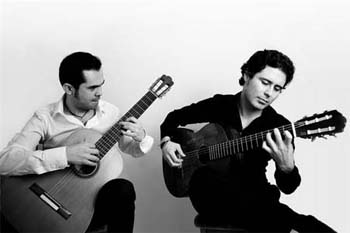
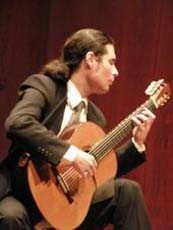
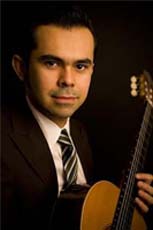 Israel Vázquez was born in Guadalajara in 1978. He started his studies at the Music Department of the University of Guadalajara with professors David Mozqueda and Hugo Gracián. From September 2002 to July 2003 he took a guitar course under Professor Carlos Bonell at the London Guitar Studio in London, England.
.jpg) His work in chamber music has also been fruitful. He represented the Mexican Embassy in several festivals and foundations in cities like Manchester and London. Together with the Stuttgart Guitar Quartet, in 2006 he obtains a Yehudi Menuhin Live Music Now scholarship, an organization in Germany which promotes concerts in hospitals and refuge houses. Israel Vázquez has also taken part in about 10 concerts for this organization. He has also made ensembles with singers, as Patrizia Piras, soprano; Mirella Hagen, Santiago Cumplido, Emilio Ruggerio and Carlos Zapién, with whom he interpreted the Aria “Ecco Ridente” from Rossini’s Barber of Seville, on March 19, 2009, together with the Reutlingen Philharmonic Orchestra.
His work in chamber music has also been fruitful. He represented the Mexican Embassy in several festivals and foundations in cities like Manchester and London. Together with the Stuttgart Guitar Quartet, in 2006 he obtains a Yehudi Menuhin Live Music Now scholarship, an organization in Germany which promotes concerts in hospitals and refuge houses. Israel Vázquez has also taken part in about 10 concerts for this organization. He has also made ensembles with singers, as Patrizia Piras, soprano; Mirella Hagen, Santiago Cumplido, Emilio Ruggerio and Carlos Zapién, with whom he interpreted the Aria “Ecco Ridente” from Rossini’s Barber of Seville, on March 19, 2009, together with the Reutlingen Philharmonic Orchestra. This Peruvian guitarist was born on November 29, 1979. His musical life starts in 1989 in Tacna, Peru, when he plays charango and zampoña in folklore workshops, to start later with the guitar. He later meets his first classic guitar teacher: Carlos Aguilea Bueno, and enters the Escuela Superior de Bellas Artes Francisco Laso in 1996, where he studies for a year.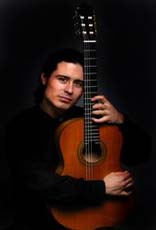
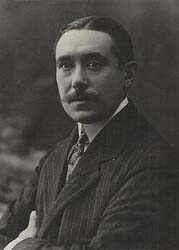 (Sevilla, December 9, 1882 - Madrid, January 14 1949).
 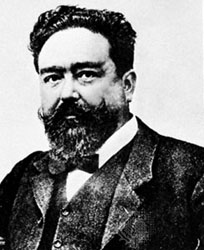 Isaac Albéniz, life, above all during his childhood and early youth is one of the most exciting novels in the history of music. As a prodigy child, he made a successful debut at a Barcelona recital when he was four. Being restless, he left his home when he was ten and travelled to several cities and villages in Castilla organizing his own concerts. In 1872, a second escape took him to Buenos Aires. Under the protection of Alfonso XII personal secretary, Count Morphy, Albeniz could continue his studies at the Brussels Conservatory, since he was very much aware of his technical deficiencies.
 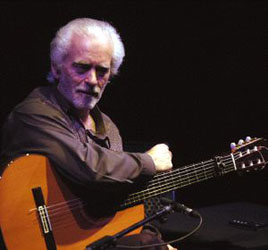 The Flamenco guitarist was born in Sanlúcar de Barrameda, Cádiz, on November 24, 1943. Manolo Sanlúcar, whose real name is Manuel Muñoz Alcón, is considered now as one of the most important guitar players, and, together with Paco de Lucía and Serranito, one of the guiding figures in the evolution of the Flamenco guitar during the last years. His style moves between purity and freshness, one that finds without resourcing to other music, but simply stemming from the same roots. He has written music for guitar and orchestra, for instance Medea for the National Ballet of Spain; Fantasy for guitar and orchestra in four movements; Trebujena for Chamber orchestra: Aljibe and Music for eight monuments. He also composed the syntony for a television Channel.
 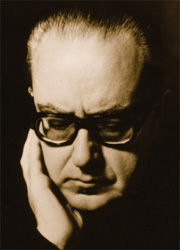 Alberto Ginastera was born in Buenos Aires, Argentina, on April 11, 1916 and died in Genève, Switzerland on June 25, 1983.
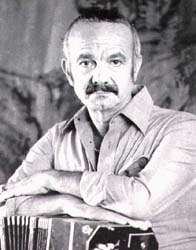 Astor Piazzolla is not only the most famous tango musician all over the world, but also a composer very frequently interpreted by remarkable international interpreters, groups of camera music and symphonic orchestras. Born at Mar del Plata, Argentina, the family moved to New York when he was two years old, and it was there that in 1929 he had his first encounter with the bandoneon. “La Catinga”, his first tango never popularized was written in 1932; he also was a child actor in “El Día que me Quieras”, starred by Carlos Gardel.